



Results 1 to 15 of 15
 LinkBack URL
 About LinkBacks
Threaded View
-
05-14-2007 08:29 PM #1
 CHR Member

- Join Date
- Dec 2006
- Location
- San Francisco bay area
- Car Year, Make, Model: 1948 Chevy pickup, 1959 Rambler American
- Posts
- 81
Weld and bolts vs Gluing panels, a science project.....
Well, we have talked about this a number of times, can "gluing" panels on a car possibly be as strong as welding it on. Well, my 10 year olds science project may have the answer!
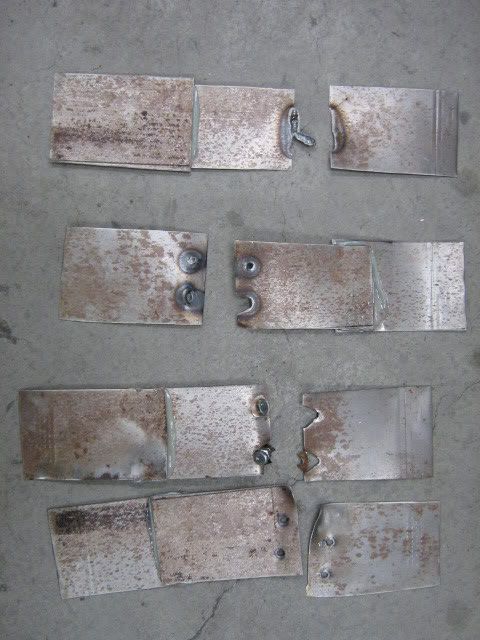
He cut 12 pieces of 20 gauge steel. We then welded them together in pairs. We butt welded with the MIG, "plug welded" with the MIG, spot welded with a $20,000 ProSpot STRSW and drilled 1/4" holes and bolted two as well. We then bonded with Winzer Universal Panel bonding adhesive another piece of metal to each of the pairs of welded and bolted sets.
We put clamps on them and pulled them apart using the Chief frame rack at work (10 year old boys love destroying things, don't they?).
Here are the results, the glue won every single time! Pretty impressive I would say.
Brian
"Fan of most anything that moves human beings"

 Reply With Quote
Posting Permissions
- You may not post new threads
- You may not post replies
- You may not post attachments
- You may not edit your posts

This site is up more often lately, but very little traffic.
Dead!