



 3Likes
Thread: Spraying a sbc


Results 1 to 15 of 19
 LinkBack URL
 About LinkBacks
-
11-27-2011 06:48 PM #1
 Registered User

- Join Date
- Nov 2011
- Location
- Shirley
- Posts
- 2
Spraying a sbc
Hey ya'll! Im a noob here and im lookin for some advise, i just picked up a mideratly built sbc for my gp, whats the best cam to run to spray the engine, and also whats the biggest shot a stock sbc can take consistantly?
-
Advertising

- Google Adsense
- REGISTERED USERS DO NOT SEE THIS AD
-
11-27-2011 07:21 PM #2
CHR Member
- Join Date
- Nov 2007
- Location
- Chicago
- Posts
- 1,354
How Much Nitrous Can a Junkyard Small-Block Take?
Small Block Nitrous Blow Up - Tech Article - Chevy High Performance MagazineWisdom is acquired by experience, not just by age
-
11-27-2011 10:44 PM #3
Banned
- Join Date
- Feb 2010
- Location
- Roch
- Car Year, Make, Model: 1985 high top Astro van
- Posts
- 2,520
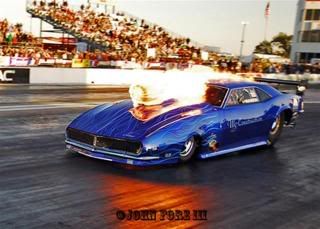
That is too much.


Good Bye
-
11-27-2011 10:52 PM #4
Banned
- Join Date
- Feb 2010
- Location
- Roch
- Car Year, Make, Model: 1985 high top Astro van
- Posts
- 2,520
I think you need to tell us more about your engine.And before you go there,do guys just throw small shots on their engines all the time??.It sure does happen all the time.I hope by supplying us with your engine spec's your going to find on this site people who are not as reckless as that.Good Bye
-
11-27-2011 11:17 PM #5
Banned
- Join Date
- Feb 2010
- Location
- Roch
- Car Year, Make, Model: 1985 high top Astro van
- Posts
- 2,520
Tell you what.This is long,but comprehensive and said better than I could:
By Dave Emanuel
The recreational use of nitrous oxide as a horsepower-enhancing compound first came into prominence in the 1960s. But its first application to internal combustion engines was for far more deadly purposes. During World War II, the Germans reportedly were the first to install nitrous oxide systems on their fighter planes. The Allies soon followed and returning servicemen transferred the technology – crude as it was – to street and race cars.
Current nitrous oxide systems are worlds apart from those used in the ’60s and ’70s, but horror stories about "the gas" causing engine damage persist. The use of nitrous oxide isn’t inherently threatening to engine life. As with any equipment that raises power output, internal stresses are increased when a nitrous system is activated.
However, when engine damage results, it’s typically caused by a system that was improperly installed. Consequently, any rebuilder who sells an engine to a customer with visions of nitrous-inspired power augmentation is well advised to counsel the customer on proper installation etiquette.
Nitrous oxide is a chemical compound that comes bubbling along whenever two nitrogen atoms decide to tango with one oxygen atom. Technically known as N20, it contains 36% oxygen by weight. Nitrous oxide won’t burn by itself, but what it does bring to an internal combustion party is a lot of oxygen, which is an essential ingredient in the combustion process. When fuel is added in the proper proportion, significant horsepower increases result.
Although it doesn’t pressurize the intake tract, a nitrous oxide system can be thought of as a "chemical supercharger." The most basic nitrous oxide system consists of an injector plate, a supply tank with manual on/off valve, the lines and fittings to connect the two, mounting hardware and electrical switches to activate the system.
The injector plate contains two spray bars (nozzles) and is easily installed beneath a carburetor or fuel injection throttle body. In a basic system, calibration is fixed to deliver the precise amounts of nitrous oxide and supplemental fuel needed to boost horsepower a given amount. More sophisticated systems contain replaceable jets, which allow power output to be increased or decreased.
Most adjustable single four-barrel street systems offer power increases ranging from 100 to 175 hp. Race systems designed for single four-barrel installations deliver 150 to 300 extra horsepower.
Inside the storage tank or bottle, which must be properly mounted so that the internal siphon tube angles down, nitrous oxide liquid lives in a high pressure environment measured at approximately 900 psi (actual pressure varies according to ambient temperature). As it exits the solenoid, nitrous enters a low pressure area inside the intake manifold.
At and/or below atmospheric pressure, the liquid vaporizes, at which point there is a severe drop in temperature. At the moment that liquid turns to vapor, nitrous temperature is -128° F. One of the reasons that injector plate systems that are placed beneath the carburetor or fuel injection throttle body work so well is that vaporizing nitrous cools the entire contents of the intake manifold. Port injectors, being located much closer to the valves, offer less of a cooling effect, but pump more nitrous oxide directly into the intake ports.
Nitrous oxide injection systems increase horsepower through two distinct means. As a gas flowing into the intake tract, nitrous oxide is an oxygen-bearing compound containing two parts nitrogen and one part oxygen.
Since it’s injected under high pressure directly into the intake manifold, an engine is force fed more oxygen than it could receive by drawing air through the carburetors or fuel injection throttle body. This is the chemical supercharging aspect of nitrous oxide: provided additional fuel is also brought to the party, increasing the amount of oxygen that an engine consumes translates into greater potential power output.
The second power producing facet of nitrous oxide’s personality is its cooling effect. Being at a sub-zero temperature when it enters the intake tract, nitrous cools everything around it, including the air and fuel that has been drawn in through the carburetor or throttle body.
As the temperature of air drops, it becomes denser, thereby increasing the number of oxygen molecules in a given volume of air space. The number of nitrogen molecules is also increased, but is of no significance since nitrogen does not participate in the combustion process.
The fact that nitrous oxide delivers a substantial shot of oxygen necessitates that fuel also be injected through a special circuit that is precisely calibrated. By weight, the theoretical optimum ratio of nitrous oxide to gasoline is about 9.5 to 1. But as a matter of practice, this ratio is usually altered to about 8.75 parts of nitrous for each part of gas. This slightly richer ratio helps prevent combustion temperatures from getting out of hand.
It’s rather obvious then that "jetting" of a nitrous system’s fuel circuit is critical. If fuel flow is inadequate, the overall air/fuel mixture will be excessively lean. That’s a serious problem, because a nitrous system is activated under maximum load conditions - the worst possible time to feed an engine a mixture that is either too rich or too lean; with nitrous, both can be deadly.
Problems ranging from poor performance to severe detonation and terminal engine damage are frequently the result of nothing more than an inadequate fuel delivery system. The vehicle’s fuel pump and plumbing must be capable of meeting the demands of the carburetor/fuel injection and the nitrous system simultaneously.
To guard against lean mixture problems, a fuel monitor or electronic controller that automatically shuts off the flow of nitrous if fuel pressure drops below a predetermined level should be installed.
While all these precautions may seem like overkill, that’s not the case. Whether it’s a street or race system, avoiding detonation is critical to maintaining reasonable engine life. And as one experienced builder of nitrous-fed engines noted, "If you don’t have an adequate fuel supply system and the right safeguards, I’ll guarantee you’ll fry an engine."
As an engine builder whose reputation will be adversely affected by a premature engine failure, you cannot put enough emphasis on the fuel delivery side of a nitrous system. The system needs to maintain at least 4.5 psi of fuel pressure under all operating conditions including maximum rpm in high gear.
Nitrous oxide has taken a bad rap from street enthusiasts because of engine damage that has resulted from use of the system. But in 99% of the cases, you can trace the problem to an improper installation.
As a minimum, there should be a low-pressure switch arrangement that can be wired up to either turn on an "idiot light" or shut off the nitrous if fuel pressure drops below 4.5 psi.
Some nitrous companies say that pressure can drop as low as 4 psi, and that’s true – if your fuel system is absolutely perfect and your pressure gauge is dead-nuts accurate. But most gauges are not supremely accurate, and if actual pressure ever drops to 4 psi while the nitrous is activated and the engine is under maximum load, there’s a good chance the engine will be toast.
While a dependable high-volume fuel pump is an essential part of a nitrous system, it doesn’t necessarily guarantee adequate fuel delivery. Some people install a high volume fuel pump and connect it to a quarter-inch fuel line that has to run 15 feet to the engine and wonder why they have fuel delivery problems. That’s one example of an improper installation. Even for a mild street engine, a 3/8" (or -6 AN) fuel line is needed at the very least. Race cars call for a 1/2" (-8 AN) or larger fuel line.
An adequate ignition system also plays a major role in the quest for maximum nitrous-inspired horsepower. Any time cylinder pressure is raised, through any means, it increases the load on the ignition system. Any engine with nitrous – even a small 75-100 hp system – should have a solid high energy ignition system. Aside from optimizing power, a suitable ignition system will also reduce the possibility of misfires, provided the cap, rotor and plug wires are in satisfactory condition.
Be aware that as an ignition system’s output energy increases, so does the possibility of a crossfire. Lighting off the mixture in a cylinder at the wrong time can be especially deadly when nitrous oxide is part of the air/fuel mixture. But crossfire isn’t the only cause of sending a spark across a plug gap at the "wrong time".
Excessive spark advance can also cause problems. Nitrous mixtures tend to burn faster than naturally aspirated air/fuel mixtures, so less aggressive spark timing is necessary. Typically, maximum advance should be in the range of 30 to 34°.
Another key to maximizing performance and minimizing problems with nitrous oxide is to use common sense when selecting a camshaft. The most sensible approach with a street engine is to select a profile that delivers strong low-speed and mid-range torque for everyday driving. That will assure crisp throttle response, good fuel economy and driveability. Then the nitrous system can be called upon to really wake things up when it’s needed.Good Bye
-
11-27-2011 11:19 PM #6
Banned
- Join Date
- Feb 2010
- Location
- Roch
- Car Year, Make, Model: 1985 high top Astro van
- Posts
- 2,520
continued:
Camming a race engine for use with nitrous also requires a bit of thought. If your customer plans to use "the bottle" only after the car has been launched (possibly in high gear only) a cam must be selected with that in mind. A car won’t produce very impressive elapsed times if it’s a slug until the nitrous system is activated.
All other considerations pertaining to building engines for use with nitrous oxide, come under the umbrella of common sense. Given that power output jumps from 50 to "who-knows-how-much" horsepower when a nitrous system is activated, component strength is of prime importance.
Standard pistons won’t cut it, at least not for very long. Hypereutectic or forged pistons are required to assure acceptable durability, as are race-prepared style connecting rods and a well-prepared crankshaft.
The oiling system also warrants attention in the form of blueprinting the pump, accurately setting bearing clearances, enlarging drainback holes and fitting a well-baffled oil pan. Basically, nitrous oxide is a chemical supercharger, so an engine must be built to handle the "boost".Good Bye
-
11-28-2011 12:07 AM #7
CHR Member
- Join Date
- Jul 2011
- Location
- Bremerton
- Car Year, Make, Model: 36' Buick Coupe,
- Posts
- 291
I think you need to consider tearing down the motor. Get a list of everything that was done and rebuild it with a different goal than the previous builder. There's just way to much to consider if your gunna go with Nos. First question I have is are you going wet or dry? I'm assuming wet from your statement of being able to use the bottle routinely. But tear it down. See what's been done to the bottom end, is it 4 bolt?, has it been machined to 4 bolt?, has the stock studs been upgraded?, does it have studs?, the list goes on. But basically take the approach of start at the crank and work your way up if your goal is to use the bottle. If your not prepared to do that id just forget it and run with what you got.R.I.P. Kustoms LLCSpeed Shop & Fabrication"Race Inspired Products"
Current Projects in Progress
1936 Buick Coupe
1966 C-10
-
11-28-2011 01:16 AM #8
CHR Member
- Join Date
- Nov 2007
- Location
- Chicago
- Posts
- 1,354
Wisdom is acquired by experience, not just by age
-
11-28-2011 05:46 PM #9
CHR Member
- Join Date
- Jul 2011
- Location
- Bremerton
- Car Year, Make, Model: 36' Buick Coupe,
- Posts
- 291
Nice post tango! now im not a big drag car guy but don't they mandate an external kill switch for instances just like this? or is that only certain classes? either way was classic they guys just sit there even while its poppin off watching it up close lolR.I.P. Kustoms LLCSpeed Shop & Fabrication"Race Inspired Products"
Current Projects in Progress
1936 Buick Coupe
1966 C-10
-
11-28-2011 06:11 PM #10
CHR Member
- Join Date
- Aug 2003
- Location
- CC
- Car Year, Make, Model: 70 Camaro Z-28 Now/40 Chevy Back Then
- Posts
- 4,306
If the motor is in descent shape it should handle a 150 shot or so. The electronic safeguards are good insurance. Keep the nozzles clean & the solenoid in good working order. Maintenance is a real good thing. How much have you got invested? I've always thought it would be fun to jack up the spray til' it kicked the rods out, just so see how much could be squeezed out of it. It's surprising how much a stock motor will take sometimes. Bottom line if you want to play, be prepared to pay."PLAN" your life like you will live to 120.
"LIVE" your life like you could die tomorrow.
John 3:16
>>>>>>
-
11-28-2011 06:20 PM #11
Banned
- Join Date
- Feb 2010
- Location
- Roch
- Car Year, Make, Model: 1985 high top Astro van
- Posts
- 2,520
I'm going with the advise included in the link.Please re-read that.I agree with it and I know his investment is being protected.One part speaks to a safety devise that if the fuel pressure drops,it shuts down the spray.Policy should be nothing below 2500 RPM.I don't want to give the O/P the impression it is just as simple as bolting it on and go. Originally Posted by pro70z28

Good Bye
-
11-28-2011 06:33 PM #12
CHR Member
- Join Date
- Aug 2003
- Location
- CC
- Car Year, Make, Model: 70 Camaro Z-28 Now/40 Chevy Back Then
- Posts
- 4,306
Sometimes they go boom...........
http://www.youtube.com/v/9kp9jR0ZtlA&feature="PLAN" your life like you will live to 120.
"LIVE" your life like you could die tomorrow.
John 3:16
>>>>>>
-
11-28-2011 07:01 PM #13
CHR Member
- Join Date
- Jan 2006
- Location
- Constantine
- Car Year, Make, Model: 57 chevy 2 dr wagon
- Posts
- 9,476
you can see in the video that one of the guys turns off the switchCharlie
Lovin' what I do and doing what I love
Some guys can fix broken NO ONE can fix STUPID
W8AMR
http://fishertrains94.webs.com/
Christian in training
-
11-29-2011 05:33 AM #14
CHR Member
- Join Date
- Nov 2007
- Location
- Chicago
- Posts
- 1,354
Pro70Z/28 that's a Bad Fire Wow ! As for Spray Cast Pistons they don't Like a Lot of It . Maybe Play it safe with a 100 H.P Kit . I Remember a Speed Shop installed a Kit on a near stock 90's LT-1 Camaro . The Owner said he Told that Guy spray it easy then check the Plugs make sure it's not to Lean . Ok when the Kid Left out the Lot He Staged the car in the Street started to Brake Torque it and Just Full Sprayed it ! Blew it up right there then Towed it away .Wisdom is acquired by experience, not just by age
-
11-29-2011 09:56 AM #15
CHR Member
- Join Date
- Jul 2011
- Location
- Bremerton
- Car Year, Make, Model: 36' Buick Coupe,
- Posts
- 291
thats what happens when you have more money than brains Originally Posted by tango
R.I.P. Kustoms LLCSpeed Shop & Fabrication"Race Inspired Products"
Current Projects in Progress
1936 Buick Coupe
1966 C-10
 Reply With Quote

Posting Permissions
- You may not post new threads
- You may not post replies
- You may not post attachments
- You may not edit your posts

Turn out the lights, the party's over THIS PLACE IS DEAD!
Dead!