



 7Likes
Thread: Project El-Cheepo Shop Heat
Results 1 to 15 of 15
 LinkBack URL
 About LinkBacks
Threaded View
-
09-07-2015 05:09 AM #7
 CHR Member

- Join Date
- Mar 2003
- Location
- SW Arizona
- Car Year, Make, Model: 68 Ply Valiant, 83 El Camino
- Posts
- 3,872
Building my stove was a long learning curve so I figured I’d add a bit to maybe save you some time and better explain some of the stuff I said above.
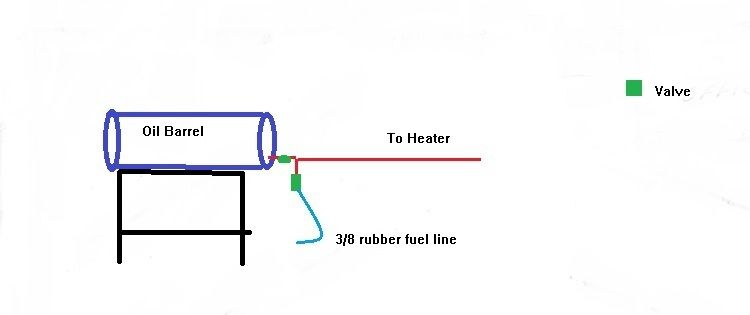
Here is my basic oil tank setup. I also have another 55 gal and a 25 gallon drum sitting on the ground that I pump into the drum on the stand when needed. Besides the extra storage, it turns out that that having the drums on the ground also serve an important secondary function. Any suspect oil (water contaminated) goes in the drums on the ground. Over time the water will settle to the bottom. Whenever I draw from the drums the first few turns on the pump go into a bucket to see if there is any water (which I pump out until I get “clean” waste oil). Once the water is out then I transfer the oil into the supply drum. Basically the drums on the ground also act as oil/water separators.
The valve attached to the fuel line on the supply tank allows me to drain any water out of the supply drum. A friend at another shop lets me pour the contaminated water back in his drums to be hauled off.
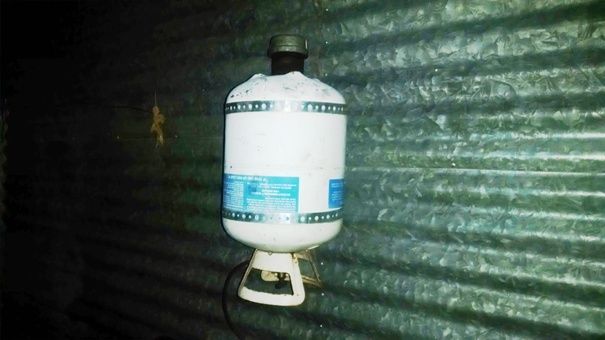
Here is what I did for the diesel supply tank…..yup it’s an old 30 pound Freon bottle with a piece of pipe welded to the bottom and a cap on it turned upside down. A standard fitting (don’t remember the size) and flare fitting connect directly to the valve.
The diesel supply tank is well worth the effort. Most waste oil heater builders tell you to pour a little kerosene/diesel fuel into the bottom of the burner to get it started first thing in the day……from personal experience that can be a bit messy and if you don’t have enough fuel in it to get it hot enough to start burning oil, you have to let it cool down completely so you can try again. Besides being easier/cleaner to get the initial fuel in the burner to get it started, with the diesel supply you can run it on fuel until it is hot enough, and if you have a problem with thick or water contaminated oil you can let the diesel continue to drip to keep the burner hot. I have also found that when I shut it down for the day, if I shut off the waste oil and drip straight diesel for a few minuets it tends to burn off a lot the crap and cuts down how often I have to clean the burner.
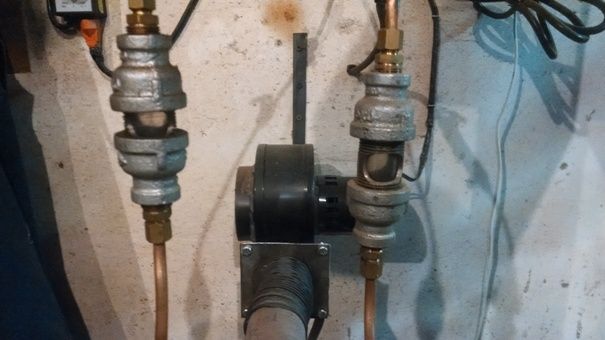
My sight glasses are pretty basic, just a handful of pipe fittings. I drilled the sight holes thru the pipe nipple and then enlarged it with a die grinder. A short piece of ½” clear plastic tubing keeps any air from interfering with the flow. When I initially built these, I had a problem with the fuel running down the sides of the plastic tubing. What I ended up having to do was drill the top compression fitting (there the oil enters) completely thru just slightly larger than the copper tubing…….this doesn’t affect the compression fitting from clamping the tubing. With the copper tubing thru the fitting slightly the oil drips straight down.
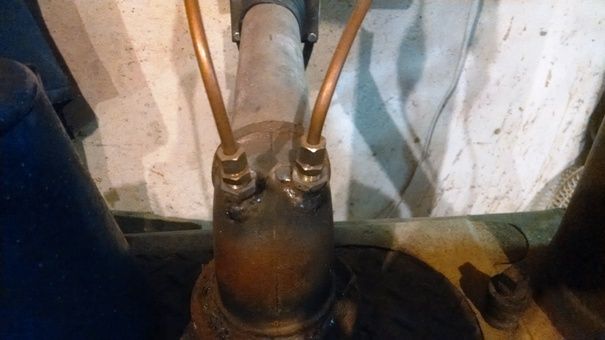
Finally this is how I ran the fuel feed pipes into the air pipe. Basically I just drilled a couple of holes and welded in the correct size fitting. I also drilled these compression fittings so the tubing passes completely thru them and terminates an inch or two above the bottom of the air supply pipe. It can take a bit of tweaking to get the pipes centered in the pipe, but it just takes a bit of patience.
As I mentioned before I found the easiest way to light the stove is to run a bit diesel into the burner, then add a squirt of lighter fluid (either charcoal lighter fluid or cigarette lighter fluid) on top of that. Then it just lights off with a match.
I guess I got a little long winded again
.Last edited by Mike P; 09-08-2015 at 03:31 PM.
I've NEVER seen a car come from the factory that couldn't be improved..... 


 Reply With Quote
Posting Permissions
- You may not post new threads
- You may not post replies
- You may not post attachments
- You may not edit your posts

Either return this forum to what was or get the HELL OUT!
Dead!